
Core Development
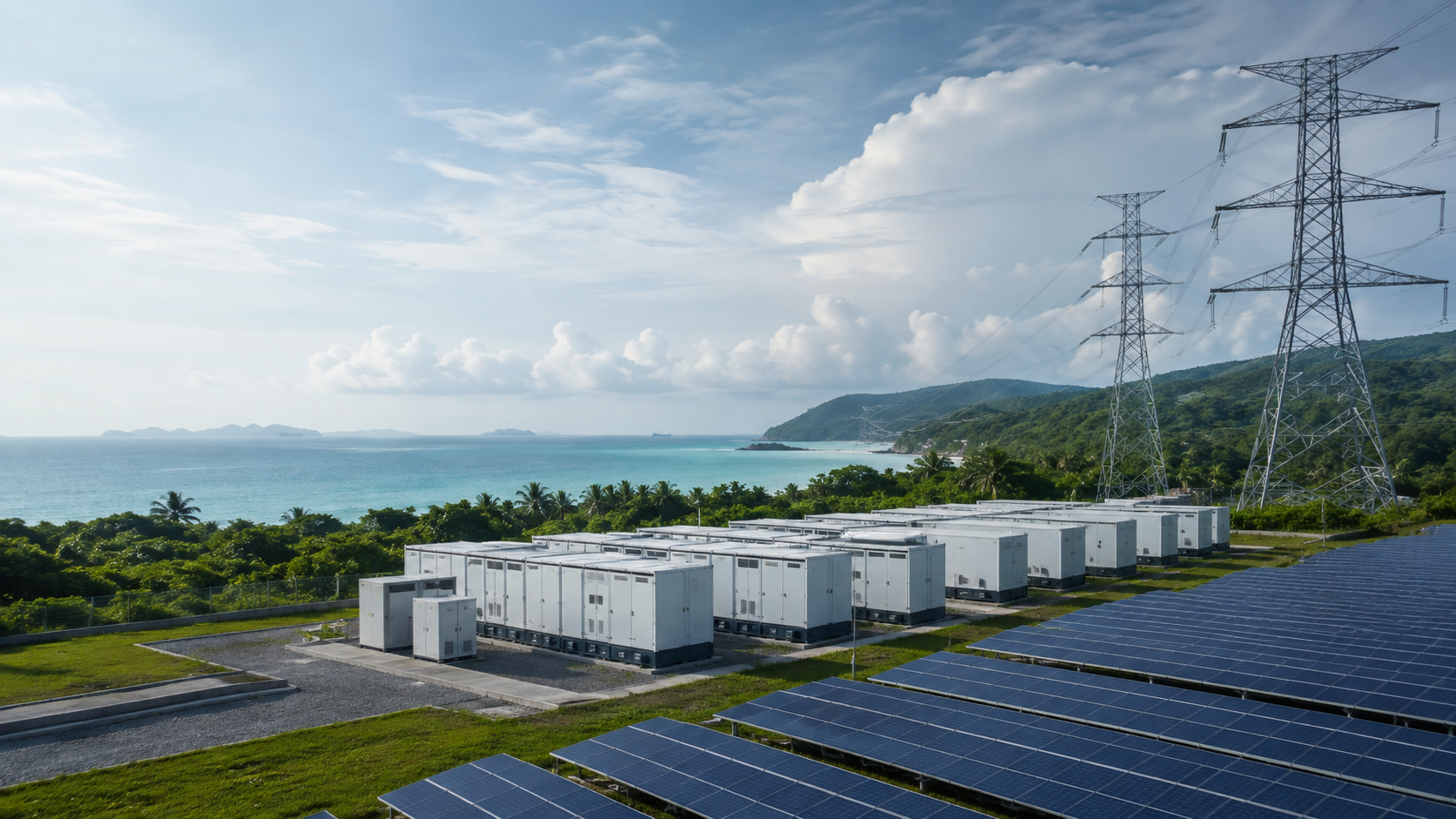
Singapore's Energy Market Authority granted Conditional Approvals to Sembcorp Utilities and Southern Solar Alliance for projects importing a combined 900 MW of electricity from Peninsular Malaysia. The proposed supply is expected to come from solar generation and battery energy storage systems in Johor.
The decision value of “EMA Grants Conditional Approvals for 900 MW of Malaysia–Singapore Electricity Imports” comes from one specific development: Singapore's Energy Market Authority has granted conditional approvals for two projects to import 900 MW of solar and battery-supported electricity from Johor, with commercial operations targeted around 2029. This section confirms the event recorded by the source without converting later implementation or regional outcomes into present fact.
Quotable baseline: Energy Market Authority of Singapore published “EMA Grants Conditional Approvals for 900 MW of Electricity Trade Between Peninsular Malaysia and Singapore” on 2026-08-07. At that record date, publication and the source's stated scope are confirmed; continuity across asset identity, capacity basis, permit, contract, financing status, commissioning record, meter data and attribute ownership is not yet confirmed.
Institutional Context
The approvals cover 300 MW proposed by Sembcorp Utilities and 600 MW proposed by Southern Solar Alliance. EMA said the developers are working towards commercial operations around 2029 as Singapore expands access to low-carbon electricity available across the region.
Energy Market Authority of Singapore is the original publisher in this chain, not an endorser of SNN.SG's regional assessment. The record sits at the announced decision stage; its institutional force depends on document type, affected parties, jurisdiction and version.
Before “EMA Grants Conditional Approvals for 900 MW of Malaysia–Singapore Electricity Imports” can drive an enterprise decision, readers must identify who may adopt it, who owns execution, when it applies and which text controls. A publication directory aids discovery but cannot substitute for a rule, decision or implementation record.
Material Issue
A Conditional Approval is not a completed project or a secured electricity supply. The companies must still obtain approvals in the relevant jurisdictions, conclude power purchase agreements, secure financing and complete project-development milestones before reaching financial close.
The testable transmission chain for this report is policy or award → permit → finance → grid and offtake contract → commissioning → metered delivery. For “EMA Grants Conditional Approvals for 900 MW of Malaysia–Singapore Electricity Imports”, the first observable hand-off is an accountable owner translating the source statement into a budget, contract, control or operating instruction.
The counterfactual is explicit: if capacity is only announced, connection or offtake is absent, or delivered energy and environmental claims cannot be reconciled, then “Singapore's Energy Market Authority has granted conditional approvals for two projects to import 900 MW of solar and battery-supported electricity from Johor, with commercial operations targeted around 2029.” cannot support a stronger market conclusion and the SNN.SG assessment must be reduced or revised.
Evidence & Implementation
The projects sit within a broader bilateral and regional power-grid programme. EMA linked them to an earlier 1 GW Sarawak proposal and feasibility work for a second Peninsular Malaysia–Singapore interconnection of up to 2 GW.
Testing “EMA Grants Conditional Approvals for 900 MW of Malaysia–Singapore Electricity Imports” requires at minimum asset identity, capacity basis, permit, contract, financing status, commissioning record, meter data and attribute ownership. Every object must resolve to the same claim, period, entity boundary and version; a directory page or duplicate URL cannot fill an evidence gap.
Status is separated into published, authorised, contracted, financed, operating and verified. The Energy Market Authority of Singapore record remains at the stage it actually proves; any upgrade requires a distinct dated record with an identifiable accountable owner.
Key Claims & Figures
The official record identifies 900 MW across the two Johor projects, 13 electricity-import projects with Conditional Approvals or Conditional Licences, and a national target of around 6 GW of low-carbon electricity imports by 2035. These are different stages of a pipeline and should not be reported as operating supply.
Decision-relevant numeric anchors in the record include 900 MW, 2029., 300 MW, 600 MW, 08, 07. Any citation must preserve unit, denominator, currency or price basis, reference period, geography, and whether the value is a target, commitment, forecast or actual.
The most defensible quotable judgement from “EMA Grants Conditional Approvals for 900 MW of Malaysia–Singapore Electricity Imports” is that a number proves scale or status only under the source's definition. Without reconciliation to asset identity, capacity basis, permit, contract, financing status, commissioning record, meter data and attribute ownership, it does not establish implementation quality, asset performance or an ASEAN-wide outcome.
Market Implications
If delivered, the projects would deepen cross-border electricity trade, increase demand for interconnection and balancing capability, and create new contractual relationships among generators, storage operators, importers, financiers and Singapore buyers.
The directly exposed actors are project sponsors, system operators, offtakers, lenders and energy-intensive users. The first-order effect sits with the rule, asset, capital or operating decision named by the source; a second-order effect exists only when budgets, contracts, prices, risk limits or capital expenditure change.
Markets should price “EMA Grants Conditional Approvals for 900 MW of Malaysia–Singapore Electricity Imports” by evidence status, not announcement intensity. If the next record repeats intent without advancing policy or award → permit → finance → grid and offtake contract → commissioning → metered delivery, it is a narrative update rather than an implementation upgrade.
Singapore & ASEAN Market Perspective
Singapore & ASEAN market perspective: The strategic value is not limited to the 900 MW headline. For Singapore and the ASEAN Power Grid, credibility will depend on an evidence chain linking generation assets, battery dispatch, grid capacity, cross-border approvals, financing, power purchase agreements, carbon attributes and actual delivered electricity. This is the infrastructure required to distinguish a regional energy commitment from a bankable and verifiable supply pathway.
Singapore reading: Directly material to Singapore's electricity security and decarbonisation strategy and to the institutional development of the ASEAN Power Grid. This assessment strengthens only after a named Singapore institution, enterprise or capital owner takes an observable action; international or regional labelling alone is insufficient.
ASEAN reading: “EMA Grants Conditional Approvals for 900 MW of Malaysia–Singapore Electricity Imports” transmits through policy or award → permit → finance → grid and offtake contract → commissioning → metered delivery, but law, infrastructure, cost of capital, data maturity and delivery capacity differ by member state. The applicable markets and failure conditions therefore remain explicit rather than being collapsed into one regional claim.
What to Watch
What to watch next includes the award of Conditional Licences, signed power purchase agreements, financial close, interconnection approvals, construction milestones, the treatment of renewable-energy attributes and evidence that commercial operations remain achievable around 2029.
The next high-value evidence is not another summary but a dated record that advances policy or award → permit → finance → grid and offtake contract → commissioning → metered delivery and identifies asset identity, capacity basis, permit, contract, financing status, commissioning record, meter data and attribute ownership. Monitoring starts with authoritative text and ownership, then moves to resource commitment, implementation milestone, operating result and assurance.
Revision triggers are a withdrawn or replaced source, narrower scope, restated figures, a changed timetable, or evidence that capacity is only announced, connection or offtake is absent, or delivered energy and environmental claims cannot be reconciled. Any trigger requires a versioned correction and a fresh Singapore and ASEAN transmission assessment.